Your Team Is Not Misaligned. Your Metrics Are.
I have been thinking about something lately. Something I noticed a while ago but only recently got to do something about.
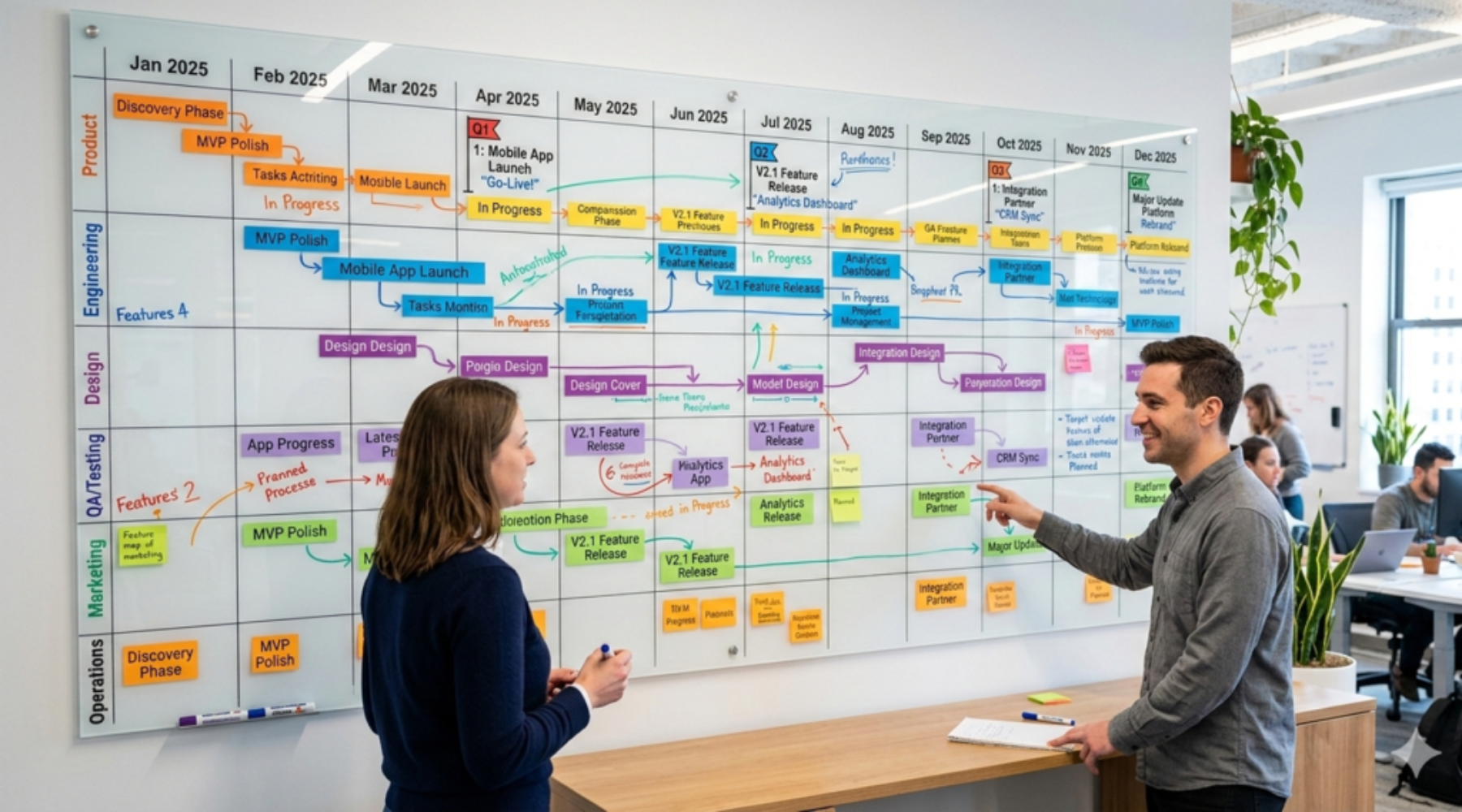
At one of the companies I worked for a couple of years back, we had four different dashboards tracking the same product. Four. The PM team had one. Sales had one. Operations had one. Customer Success had their own.
Same product. Four different versions of what success looked like.
It was like four people watching the same movie but somehow describing completely different plots. At full volume. In a meeting room with bad coffee.
And we wondered why decisions took forever. Why alignment meetings felt like negotiations. Why everyone showed up with data that somehow, miraculously, supported their own position.
We were not slow because of bad people or bad process. We were slow because we were not even looking at the same reality. Which, when you say it out loud, is kind of hilarious. And also kind of sad.
That stuck with me. For a long time actually.
What if that is the actual problem? Not prioritization. Not roadmap quality. Not team structure. Just four teams, each staring at their own slice of the truth, each fully convinced their slice is the whole picture.
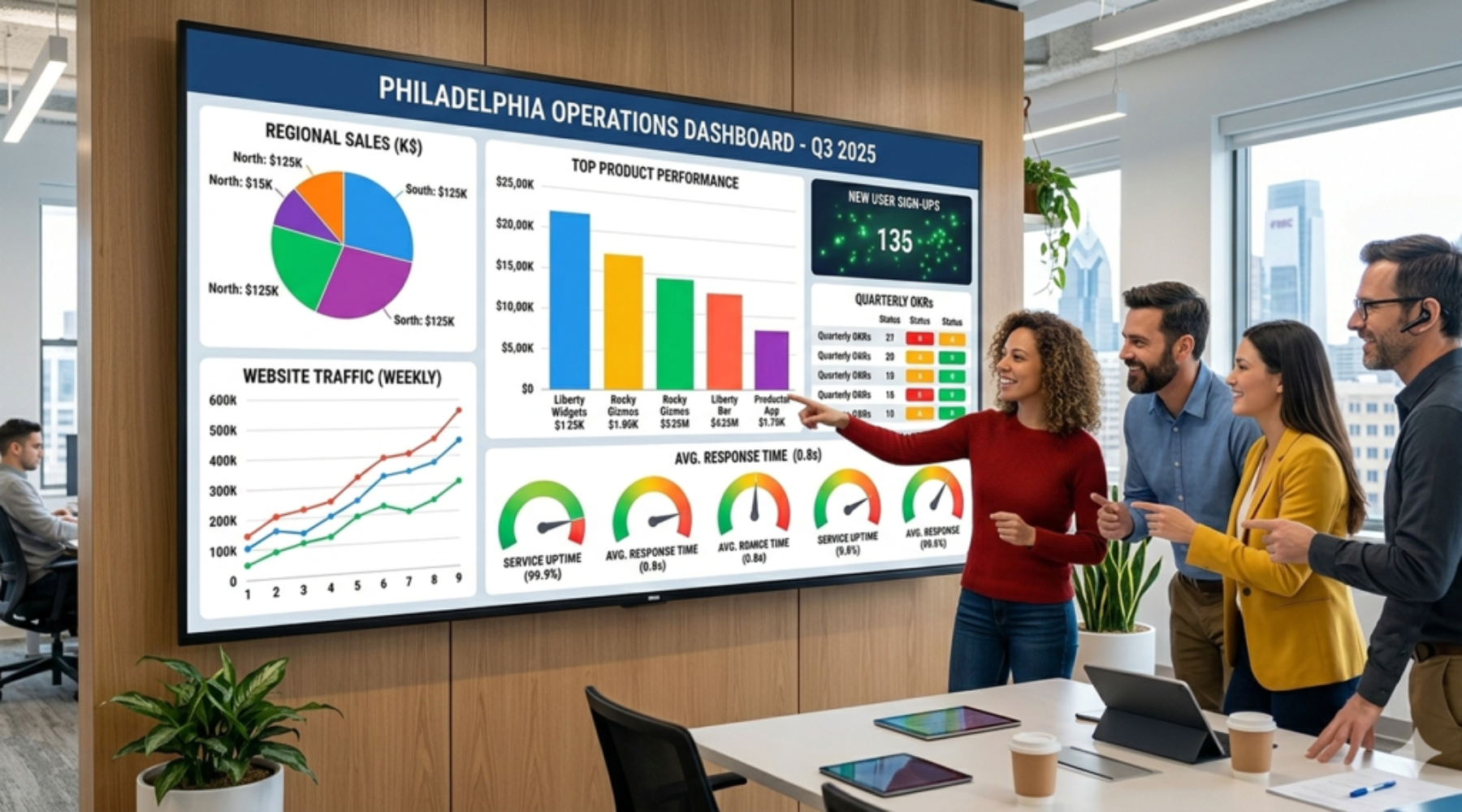
This year, with one of the companies I have been working with, I finally got to do it differently. We built one shared dashboard. Product metrics next to commercial metrics next to customer metrics. In one place. Updated in real time. Every team looking at the same numbers every week.
No translation layer. No “let me pull that from our system.” No version of the data that was three weeks old because someone forgot to refresh the export. No more showing up to a meeting with a spreadsheet that contradicts the other guy’s spreadsheet and then spending forty minutes figuring out whose spreadsheet is lying.
Just one shared view of what was actually happening.
The difference was immediate. Not in the data itself. In the conversations around it.
I read something recently from Product School that put it plainly. The winning teams in 2026 are building shared dashboards that mix product, commercial, and customer metrics so PMs, engineers, designers, and GTM teams are all looking at the same outcomes every week and adjusting in real time. Siloed metrics, they said, are a root cause of slow and misaligned teams.
That landed differently after what I had seen in the field. Because it is not just about speed. It is about trust.
When everyone has their own dashboard, every meeting becomes a debate about whose numbers are right before you can even get to what to do about them. You spend the first twenty minutes of every decision-making conversation just trying to agree on the current state. That is exhausting. And it is invisible. Nobody puts “reconciled four versions of the same data” in a retrospective. But it costs more than people think.
What if the fix is not another framework or another process? What if it is just one screen, visible to everyone, showing the same thing at the same time?
It sounds almost too simple. Suspiciously simple, even. But I keep coming back to it.
The teams I have seen move fast are not necessarily smarter or better staffed. They just spend less time arguing about what is true and more time deciding what to do about it.
That is the whole game, really. And it starts with everyone looking at the same dashboard.