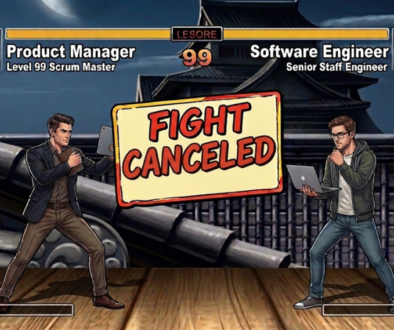
Three Product Managers Were Just Replaced by One Engineer With an AI Tool
Three PMs out. One engineer with AI in. Shipped faster. Costs down. Leadership satisfied.
Nobody outside the company noticed.
I heard this story at an online PM meetup last week. One of those Thursday evening Zoom calls where people are honest because nobody’s boss is on the call. Someone shared it. The room went quiet for a second. Then everyone started talking at once.
The question hanging over the whole conversation was one a lot of people are avoiding: is AI replacing product managers, or are we just watching a specific version of the role disappear?
What Actually Happened at That Company
When someone pushed for details, the picture got uncomfortable fast.
Those three PMs were spending most of their time writing tickets, summarizing Slack threads into Confluence pages nobody opened, updating roadmaps that changed every two weeks, and translating what engineers said into what executives wanted to hear.
That is not product management. That is coordination theater, and AI does it better, faster, and for $20 a month.
The engineer who stepped in was not doing any of that. Instead, he was talking directly to customers, making calls, and shipping. The AI handled the documentation, the summaries, and the spec formatting. Output went up. Overhead went down.
The Pushback That Reframed the Whole Conversation
Then the conversation shifted.
A GPM on the call pushed back hard. He said something that stuck: AI can write the PRD, but it cannot sit across from a customer who is about to churn and figure out in real time that the actual problem is not the product. It is that nobody ever called them.
And he is right.
The PMs who are not losing sleep right now are doing the work AI cannot structure. They make unpopular calls backed by data rather than consensus. They hold context when the company pivots, a key engineer leaves, and a competitor ships in the same week. They read between the lines of an NPS comment, a support ticket, or an awkward user interview. Most importantly, they own outcomes, not just outputs.
AI can generate fifty feature ideas. It cannot, however, be accountable for whether they were the right fifty. That accountability is precisely what makes a strong PM irreplaceable.
The Version of the PM Role That Is Actually Dying
The role is not dying. A version of it is, and honestly, good riddance.
The ticket manager PM is getting compressed into tools that cost less than a lunch. What replaces it is harder, higher-stakes, and considerably more interesting.
A PM who thinks like a founder, speaks the language of engineers, and obsesses over customer outcomes is not threatened by AI replacing product managers. That profile is in demand because of it. The bar simply moved, and moved fast.
The Question the Meetup Ended On
The call wrapped without a real conclusion. People logged off with more questions than answers.
One thing, however, was clear. The PMs who were scared could not clearly articulate what they did that AI could not replace. The ones who were not scared answered that question before it was even asked.
The gap between those two groups is closing fast.
Which side are you on?
Takeaways: What Separates the PMs Who Are Safe From the Ones Who Are Not
- Coordination theater, including writing tickets, summarizing threads, and reformatting specs, is already being automated
- The PM work AI cannot replace is judgment, accountability, and human context
- If you cannot clearly articulate what you do that AI cannot replicate, that is worth sitting with
- Owning outcomes rather than outputs is the clearest line between replaceable and irreplaceable
- The PM role is not disappearing. It is bifurcating into two very different career paths
- The version that survives thinks like a founder, not a project coordinator
If this conversation resonated and you want to think through where your role sits, reach out through benjaminlecam.info or message me on LinkedIn.